“Herald-ish” is, of course, a play on “Heraldry.” When the idea of the Fantasy genre comes up, many people immediately picture the Middle Ages with knights and wizards. This is a result of the English people, on an island rife with history of invasion, conquest, and often forced assimilation, looking back into prehistory for a sense of identity and finding the Brittonic legends of King Arthur. These concepts spread wherever English is spoken, as language is a medium to transmit ideas.
Heraldry was also a medium, a codification to display a history, identity, and values.
Our speculative worlds are our playgrounds, and our stories set in them are a way to invite others in to play. We use different trappings, be they dragons or spaceships or regency gowns to signal to others that share our interests. But beneath that, we seek to share our ideas and experiences. And it’s to be expected that our attempts don’t work on the first try. The value is learning and trying again until it works. That’s why we make drafts and then we edit them.
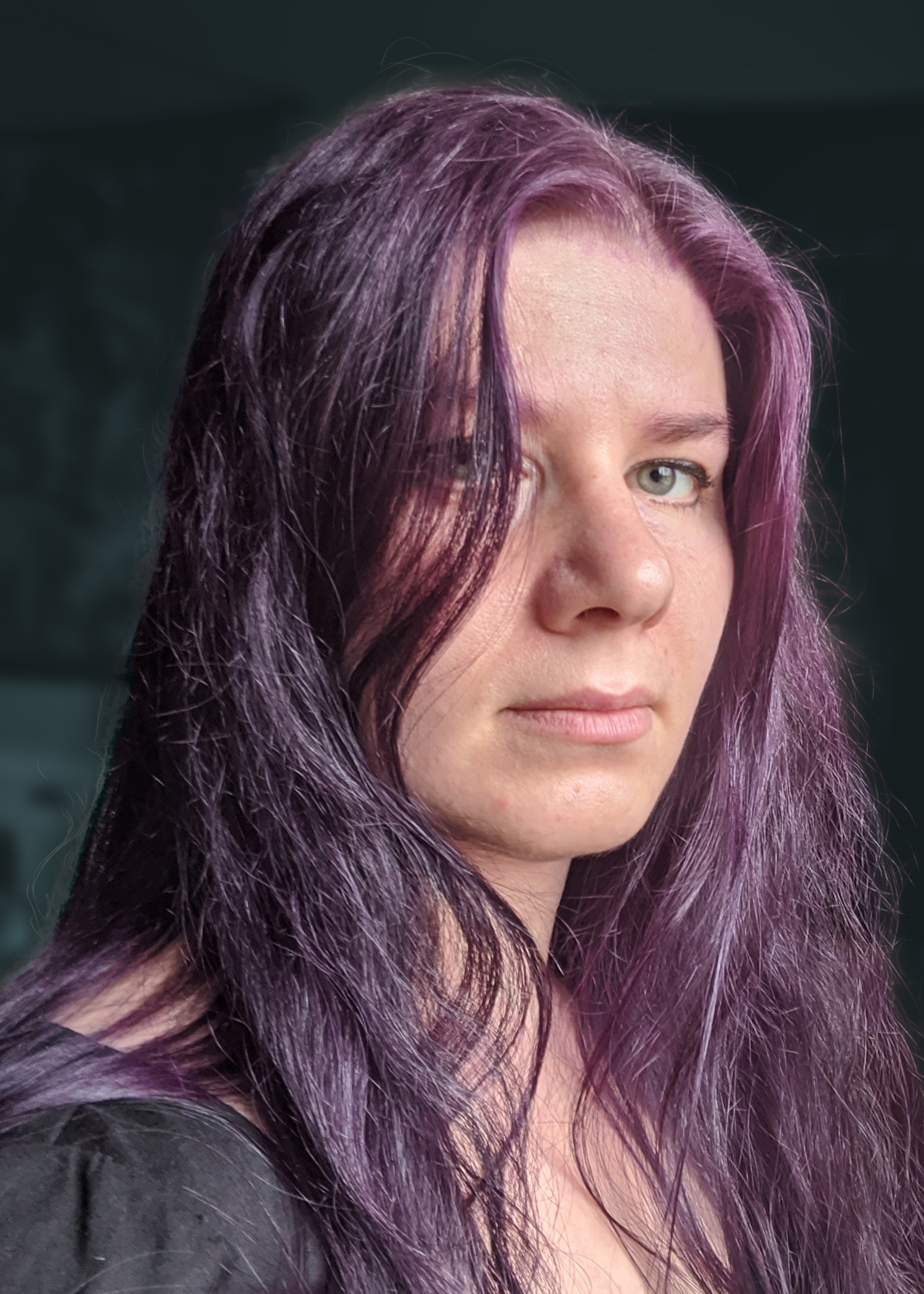
About Me
I often say stories are my native language. This makes me quite similar to other humans, I think.
In the earliest pictoral evidence of me writing a book, I was six years old. I remember that book, somewhat. It wasn't much good. Pretty dirivitive. But I kept trying. I never finished any of those novels because, when you're a child, it turns out you outgrow your ideas faster than you can finish a novel.
I took a short story class from the community college when I was in high school. My teacher told me I was trying to fit way too much scope into my short story. I have yet to finish a short story that readers don't think is just a first chapter. (I've also yet to finish a novel that readers think is standalone.)
I attended Marlboro College (RIP), where a chief principle was "clear writing shows clear thinking," and I passed the clear writing requirement (non-fiction, by the way) during my freshman year. I had intended to study art and fiction writing. However, my semester-end review with my painting teacher was very short. "You are not an artist. You're an illustrator." I did not take any more art classes.
I did however become a regular at the fiction workshop. But I ran into a situation where one of the writing professors was on sabattical for my junior year, while the other went on sabbattical for my senior year. I started a novel with the one, and he left and the second came back, she refused to work with me on it. Said it would be too long for me to finish in time and suggested I make a comic book instead. Because...that takes less time (No, not even a little). But I wanted to graduate, so I made the comic like she insisted.
Anyway, that's how I got my linguistics degree. (Shout out to Edmund Brelsford and Thomas Ernst for being super welcoming and supportive!)
That comic wasn't great, but I did come out of it with many ideas on how to make a better one. I began a webcomic with another artist and we updated a couple years and tabled at some conventions.
I also began child-rearing about this time. I thought I would be able to do both parenting and comicking, of course, but unfortunately, I instead became chronically ill. I went through about ten years and countless doctors before I finally got the fibromyalgia and c-ptsd diagnoses and enough medication to manage a few of my symptoms.
I still may never be healthy or pain-free, but the brain fog is gone. And with that, I found my way back into writing.
Not that I ever really quit writing; it was just very difficult to do long-form storytelling with brain fog.
I finished novels, then started re-seeking out that fiction workshop experience from college. Critique groups, exchanges, workshops, I've been doing that all for another ten years. So now I sit before you with over twenty years of experience to offer.